 |
|
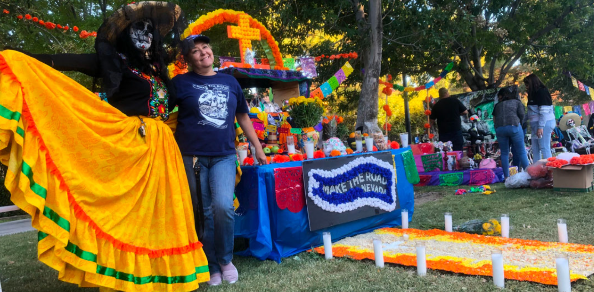
Image credit: Make the Road Nevada
|
|
Welcome to the first edition of the People, Parks, and Power quarterly newsletter on park and green space equity. We’ll be sending these emails every few months with news, events, and opportunities to connect with a growing national network. We want to tailor this space for you—share your interests with P3 [at] PreventionInstitute.org (our team)!
|
|
🌱 What is People, Parks, and Power (P3)?
P3—a joint effort of the Robert Wood Johnson Foundation and the Doris Duke Charitable Foundation, led and managed by Prevention Institute—is the first national funding initiative in the U.S. to support power building by community-based organizations to advance park and green space equity in Black, Latino, and Indigenous communities across the country. Learn about our theory of change and watch this webinar to learn more about P3’s approach, which is rooted in power building, racial justice, and local-level policy and systems change.
🌱 Introducing the P3 Local Partners
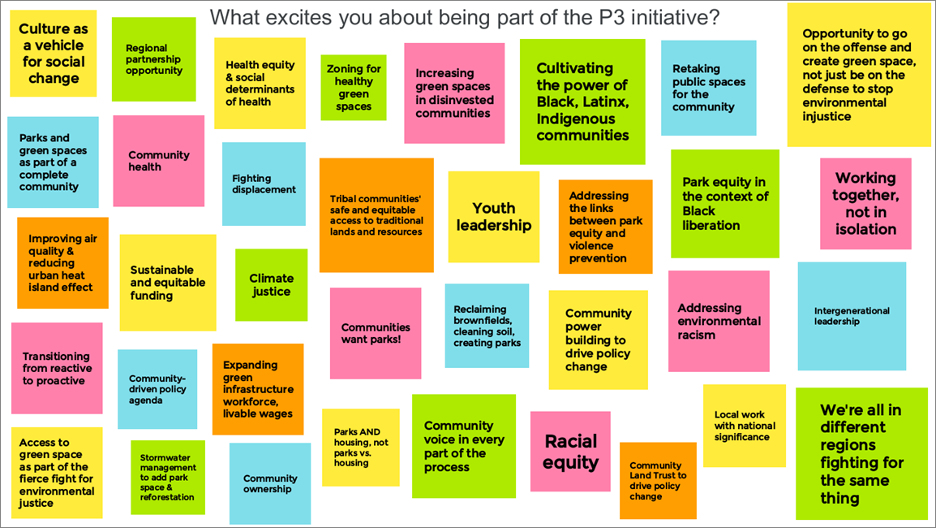
In July, we announced P3’s inaugural cohort. Our 14 local partners were awarded two-year $500,000 grants to build community power and advocate for local policy and systems change around park and green space equity. Here are some of their reflections on being part of this groundbreaking national funding initiative:
|
|
🌱P3 Local Partner Spotlights
In each issue, we’ll feature the work of a few P3 local partners. First up: Central Texas Interfaith, Chispa Arizona, and South Bronx Unite!
|
|
Central Texas Interfaith Sponsoring Committee is a local affiliate of the Industrial Areas Foundation, the largest national network of faith and community-based organizations. Their 50 member institutions work together towards systemic change in working class communities and communities of color in Central Texas. They are applying their successful organizing and power building model to advance park equity in the historically Latino and Black neighborhoods of East and South Austin—communities with green space deficits that now face displacement threats. Read this blog and follow Central Texas Interfaith on Twitter and Facebook to learn more about their amazing work.
|
|
Chispa Arizona organizes and builds power among Latino residents of Phoenix, AZ for environmental justice. They are advocating for local policies and urban development practices that combat extreme heat and advance green space equity. Follow Chispa AZ on Twitter, Instagram, Facebook, and TikTok to learn more about their incredible work.
|
|
South Bronx Unite is an environmental justice organization building community power in the predominantly Black and brown neighborhoods of Mott Haven and Port Morris in the South Bronx, NY. They are advocating for city-level policy and systems changes, and increased funding for green spaces in frontline communities through their Community Land Trust. Read this recent article and follow South Bronx Unite on Twitter, Instagram, and Facebook to learn more about their powerful work.
|
|
🌱 News & Research
- The Biden-Harris administration announced a commitment to create more equitable access to green space in nature-deprived communities. The White House Council on Environmental Quality will develop the Nature in Communities Committee with representatives from 10 federal agencies to increase access to nature and its benefits. Read this blog from our partners at the Natural Resources Defense Council (NRDC), celebrating this historic federal commitment and the opportunities it creates for park equity.
- The Movement for Black Lives’ climate and environmental justice initiative, The Black Hive, recently set forth an updated Black Climate Mandate. Among other priorities, it calls for “access to trees, green spaces, and nature for Black communities,” recognizing that, “through intentional design, the places where Black communities live are on average 5 degrees hotter than white ones.” It affirms that “Black communities can and must become sustainable, walkable, resilient, green spaces.”
- The Inflation Reduction Act is a remarkable investment in urban greening. The act includes $1.5 billion for the U.S. Forest Service’s Urban and Community Forestry Program. Funding will be allocated through competitive grants focused on reaching neighborhoods that lack green infrastructure and are most negatively impacted by climate change.
- Climate change is deeply connected to justice and equity. A new study analyzed how the 100 largest cities in the U.S. have integrated justice into climate mitigation planning—including through urban greening—and describes four policy tools cities are using to implement justice-oriented climate policies on the ground.
- To be equitable, green infrastructure planning and policies must transform. A comprehensive review of green infrastructure plans in 20 U.S. cities found widespread failure to embed equity and justice. Local, state, and federal policy must build inclusive planning capacity with communities, the authors say.
- How can we create green space without gentrification? The New York Times covered the 11th Street Bridge Park project in Anacostia, a neighborhood in Washington, D.C. Authors from a similar article contend, “Greening and environmental cleanup do not automatically or necessarily lead to gentrification. There are tools that can make cities both greener and more inclusive, if the political will exists.” Policy and systems change is key.
🌱Events
- Stay tuned for our 2023 P3 event calendar! We’ll announce webinars on park and green space equity for public agencies, as well as other networking and learning opportunities.
🌱Funding Opportunities
- The Mosaic Movement Infrastructure RFP will distribute $5.5M to support climate, conservation, and justice work. Grants are between $50,000 - $300,000. The application deadline is 12/16/22. Learn more and apply.
- Fund for Frontline Power will provide grants for small, BIPOC-led frontline organizations working to address climate issues in the communities that need it most. Grants are between $100,000 - $250,000. The application deadline is 1/15/23. Learn more and apply.
Wishing you a safe and healthy holiday season,
The People, Parks, and Power (P3) team
Prevention Institute
P3 [at] PreventionInstitute.org (P3[at]PreventionInstitute[dot]org) |
|
|