A national initiative for green space, health equity and racial justice
The P3 National Network at the P3 Annual Convening in Oakland, CA, May 2025
Movement-building in a time of uncertainty
Three years ago, in partnership with Robert Wood Johnson Foundation and the Doris Duke Charitable Foundation, Prevention Institute launched the People, Parks, and Power (P3) initiative. By resourcing and elevating the work of 14 BIPOC-led organizations leading the charge on park and green space equity, P3 seeks to create equitable and racially just systems that create healthier communities.
In a disorienting time of political and social turmoil, why do efforts to create parks and green spaces matter? How do we find hope and optimism in our current reality? In May of this year, we brought together our P3 Local Partners for our annual convening in Oakland to help answer this question. We invite you to read the insightful and inspiring words of Dr. Danielle Spurlock from Communities in Partnership below. And in the coming weeks, additional voices and thoughts will be shared. We invite you to subscribe to this newsletterand follow us on LinkedIn.
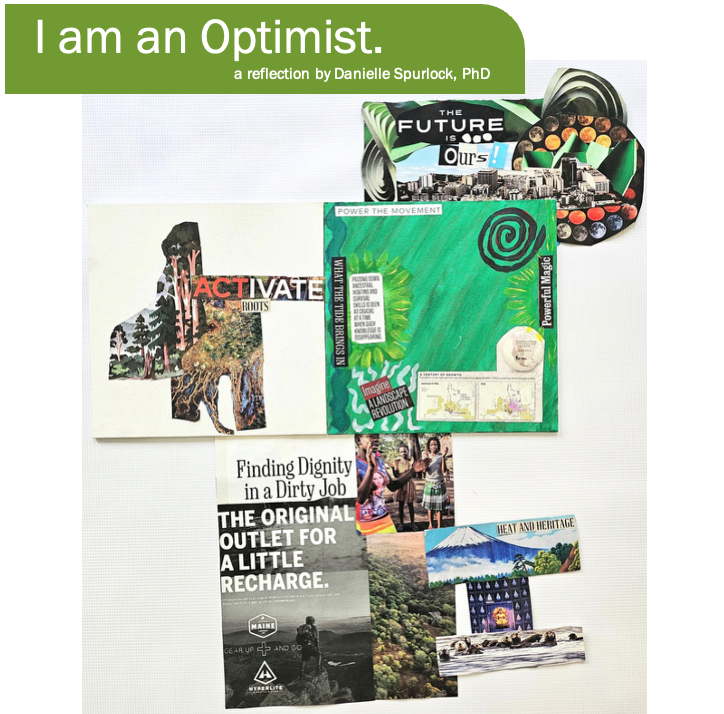
Multimedia collage created by P3 Partners Danielle Spurlock, Shariana Ferrer, Jessica Dandridge Smith, Chaka Mkali, Karlos Marshall, and Masavi Perea.
I am an optimist. My optimism exists because of (rather than despite) two decades of work in environmental justice. Black community activists who have fought single battles longer than I’ve been alive sustain my optimism with their dedication, intensity, and their firm belief in a better present and future. Elders who pour their life force into movements during grief, joy, illness, and loss. More than one has told me they don’t expect to see the fruit of their labor. But this realization is not wrapped in bitterness or even justifiable cynicism. It is seated in deep care for their family, friends, the environment, their community, and for the coming generations who they will never know. In a sociopolitical system driven by markets and monetary value, their non-transactional community care is radical. I am an optimist because I work with people fighting to change inequitable systems.
It shouldn’t come as a surprise that my optimism has been tested in recent years. At the local, state, federal, and global level, the cruelty that has always undergirded our public policy is amplified and celebrated. As I battle a growing seed of pessimism, I find sharing time and space with folks who are driving movements forward is more important than ever. The 2025 People, Parks, and Power convening was such a space.
Providing organizations with the opportunity to connect rather than compete and perform is essential to building and maintaining liberative movements. We must bring those who often toil in isolation together. I don’t mean geographic isolation or social isolation. But the isolation brought on by their radical commitment to challenge systematic racism and inequity. At this year convening, my *pod strengthened my resolve and replenished my hope.
*Attendees of the P3 convening were assigned to small groups called pods that would periodically meet throughout the convening to discuss emergent themes and process new ideas and themes together. Each pod was made up of people from different organizations and different parts of the country.
“Liberation won’t come from “fixing” the existing system because it isn’t broken. It is functioning as designed. However, we owe those impacted by injustice more than the promise of a different future. We must change their lived experience now.”
Systems Thinking and Scale
Too often, funders see systems thinking as scattered thought when exercised by community organizations. Resistance to the multi-faceted strategies necessary to dismantle an inequitable system continued to be a fundamental challenge toCommunities in Partnership’swork. Working within the P3 cohort has been a revelation, where our systems approach is both legible and celebrated. After being advised to do “less” and narrow our work, it is a relief to share space with organizations likeThe Conscious Connectin Springfield, Ohio that connect affordable housing, economic development, and the right to green spaces. The interdependence of systems that function so well to marginalize low wealth Black and Brown communities demand acting at multiple levels on multiple topics to promote community well-being. As community-rooted organizations, systems thinking is foundational to our approach.
The call to narrow our focus is often accompanied by the push to scale up existing initiatives. Conversations withColectiva Feminista en Construcciónin Puerto Rico helped me name the tension implicit in this call. Yes, we want and need more resources for our work. And yes, many of the initiatives created by P3 organizations should be shared across the nation.But what is lost when we scale up initiatives without understanding how contextual knowledge strengthens an organization’s initiatives?
Put another way, do we oversimplify and discount the local expertise of community organizations when we call on them to reach beyond the areas and networks where they have close ties? Assuming one size will fit all belies our accountability to community residents, our commitment to deep engagement, and our understanding of the power dynamics and root causes of inequity in a particular area. While it is laudable to seek more coverage of initiatives, these requests often disregard the local knowledge that made the programs effective and separates those most impacted from the leadership of the organization and key initiatives. While a commitment to scaling up is often the most direct pathway to continue funding for any initiative, we must convince funders our networked efforts in a program like P3 contribute to the goals of increasing the reach and coverage.
Victories within a Broken System
Throughout the P3 cohort, there is a commitment to improving the everyday existence of community residents even as we seek to dismantle our inequitable system. Even before the recent attacks on environmental protections, Black, Latine, and low-income communities were not protected through the purposeful omission and uneven enforcement of regulations. Given the substantial documentation of environmental injustice in air quality, flooding risk, water quality, urban heat, and the provision of green spaces, believing change can come from within our current sociopolitical system seems naïve. However, Chispa Arizonareminds us, “We can’t have a healthy environment without a healthy democracy”. Addressing environmental justice requires broadening the electorate to reflect the values of those most impacted by environmental degradation. The Water Collaborative of Greater New Orleansis using a novel equity-based model to shift the burden of stormwater management away from individual households while ensuring there are resources to address the impacts of climate change. Liberation won’t come from “fixing” the existing system because it isn’t broken. It is functioning as designed. However, we owe those impacted by injustice more than the promise of a different future. We must change their lived experience now.
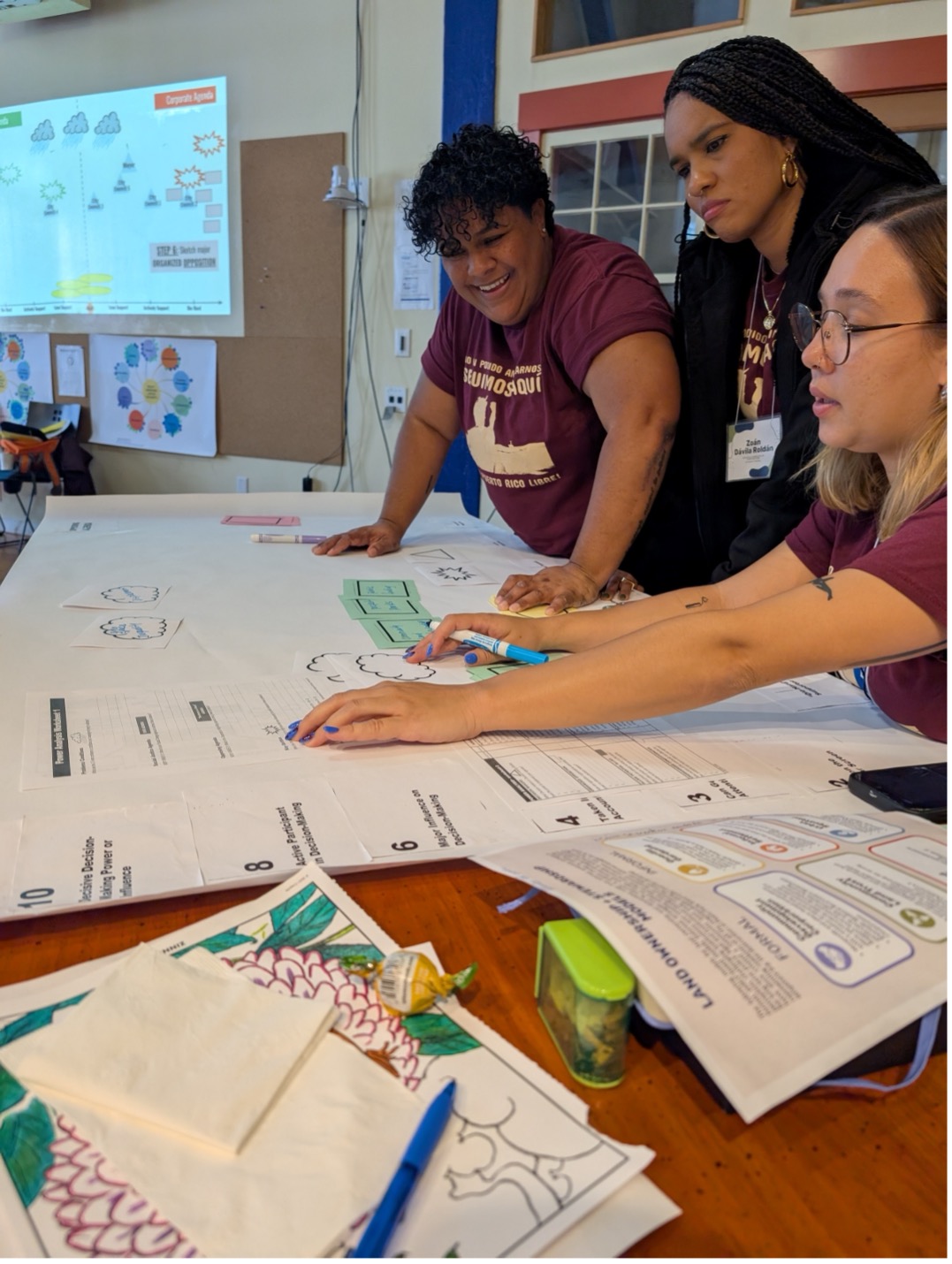
Members from La Colectiva Feminista en Construcción discussing the park equity power levers in their community of Río Piedras in San Juan, Puerto Rico.
Self-Preservation as Movement Work
Burnout was a recurring theme in too many of my P3 conversations, which is not surprising given what movement work demands. Even in a supportive environment, attempts to alter established systems are exhausting. That exhaustion increases tenfold when allied individuals and organizations reveal an affinity to current power structures. Overcoming the inertia of how things have always been done can just be too daunting. Here I am most indebted to the folks at Hope Community in Minneapolis for the language to help me move forward. Self-preservation is movement work. We must alter the way we move through space because the work won’t move forward if we are not whole individuals. We must first know ourselves and then we must map our power. Because we are powerful. Otherwise, the opposition wouldn’t fight this hard.
Danielle Spurlockis an Associate Professor of City and Regional Planning at the University of North Carolina at Chapel Hill and is a longtime partner of Communities in Partnership in Durham’s Old East neighborhood.
Prevention Institute’s Grace Cotangco has anop-ed in Nonprofit Quarterlythat highlights why building community power is key to dismantling the unjust, inequitable systems that are standing in the way of park equity.
How we talk about parks and green spaces can help (or hinder) progress towards park equity. To bring park equity to scale, we need to center narratives led by those who are rooted in communities where park inequities are profound. But what is the dominant narrative about parks and green space? And how different is that dominant narrative from the narrative we want to see? Learn more in the park equity messaging guidedeveloped by Berkeley Media Studies Group.
Check outpast newsletter issuesor P3 [at] PreventionInstitute.org (drop us a note) to let us know what you’d like to see featured in future issues.
We’ve got more than 25 years of experience supporting community collaboratives, practitioners, funders, and jurisdictions. Check out our services and reach out.
 AUGUST 2025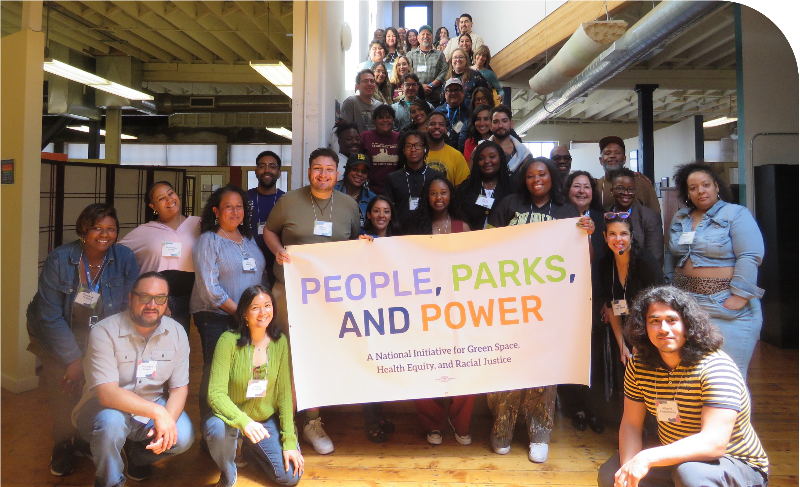
 Movement-building in a time of uncertainty