

Centering and Elevating the Voices of Those Most Impacted by Violence
Centering and Elevating the Voices of Those Most Impacted by Violence
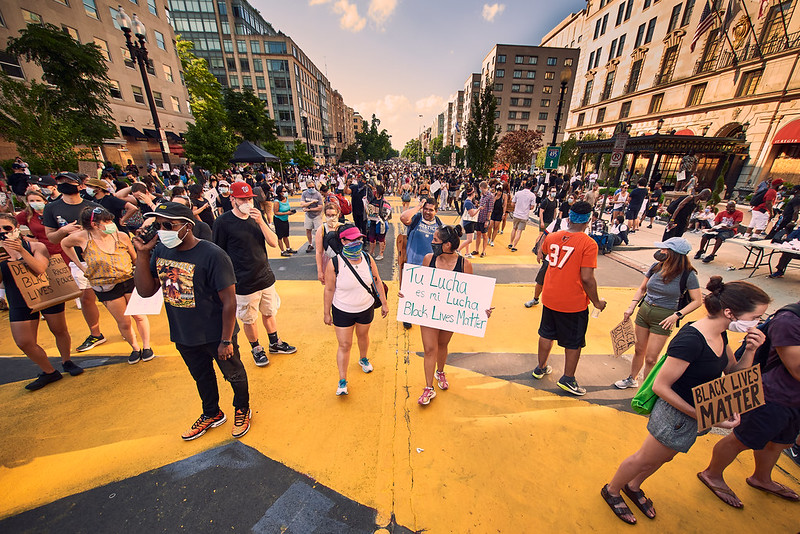
Image by Geoff Livingston on flickr
To ensure that your messages and narrative change efforts and messages resonate, it’s important to consider both the message and the messenger, and think about the audience you are trying to reach. Every community is different, with diverse needs and challenges and corresponding approaches to preventing violence. It’s important to consider each community’s strengths, needs, and priorities, while also considering an overarching context and framework for strategies, to get the message across. For example:
- Know your audience and what language will resonate with them. For example, some communities, particularly those with disproportionate exposure to violence, do not need “lectures” on topics like violence and crime. Rather, they should be participating in and leading local community safety efforts. Decision-makers might support narratives that utilize data and statistics, which makes it important to include qualitative data and stories of healing and resilience, in narratives designed to urge them to action.
- The right messengers or spokespeople for communicating on community safety efforts, challenges, and successes is vital to ensuring that the narrative is heard, understood, and acted upon. Efforts should include people doing on-the-ground work to prevent violence, including residents, grassroots leaders, young people, and those with lived experience. Additionally, while people with lived experience should be involved, it is important to consider time to heal before they can become effective messengers or work with local artists and changemakers to co-create messages and narratives.
- Data on incidences of violence and positive measures of safety are important in communicating to various segments of the community in any local jurisdiction. These efforts must also be married to appropriate messengers depending on the audience. Residents will likely resonate with other residents and decision-makers to mobilize on specific actions. Noted experts (e.g., medical professionals, academics, researchers) will more likely resonate with the media to advocate for policy change.
- A public health pathway to community safety should include input and participation from different sectors. Collaboration can help support effective messaging by ensuring that different sectors, such as education, housing, parks and recreation, and transportation, which are embedded in the community can help elevate and amplify narratives of safety and healing.
- Young people are effective messengers and are often eager and ready to work toward equity and racial justice. Young leaders come at this work with a perspective that recognizes and values intersectionality and the impact that community environments have on health, safety, and wellbeing. They should be part of any community-driven effort to improve safety and communicate successes.