
PI Perspectives
Our take on important issues affecting the prevention community.
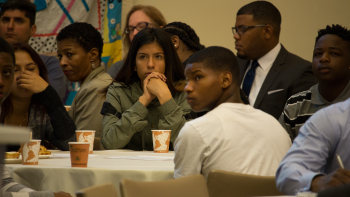
This two-minute video, created with our Making Connections partners in Los Angeles, provides an overview of the initiative and a glimpse at our collaborators across the U.S.
Working as a thought-partner with the Robert Wood Johnson Foundation, PI conducted an analysis to determine the sectors and systems to engage for achieving health equity, and pinpointing the actions to accomplish to achieve equitable outcomes. The analysis resulted in Countering the Production of Inequities: A Framework of Emerging Systems to Achieve an Equitable Culture of Health. The framework underscores how historical and current policies and laws, practices and procedures produce inequities in health outcomes to inform a concrete understanding of how to begin to reverse or ameliorate the inequities and support communities in transforming to achieve an equitable culture of health.
We have an opportunity to take transformational steps to improve our health system—from one that emphasizes sick care to one that focuses on keeping people healthy in the first place, and addresses inequities in health and safety.

This first-of-its-kind framework explores trauma at a community level. It explains how trauma is produced not only by experiencing interpersonal violence but also by experiencing structural violence – the harm that individuals, families, and communities experience from the economic and social structure; social institutions; and social relations of power, privilege and inequity that inhibit them from meeting their basic needs.
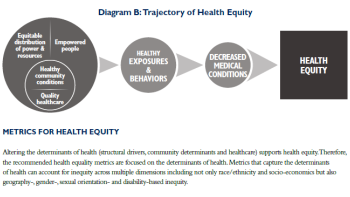
This paper provides a framework for understanding how disparities in health outcomes are produced and how health equity can be achieved, particularly by addressing the determinants of health. It also delineates a set of metrics that could reflect progress toward achieving health equity.

This paper applies Collaboration Math to the U.C. Berkeley Traffic Safety Center (TSC). Their mission is to reduce traffic fatalities and injuries through multi-disciplinary collaboration in education; research; and outreach. A main goal of the Center is to strengthen the capability of government, academic institutions and local community organizations to enhance traffic safety.

Decisions about how land is used, by whom, and for what purposes hold immense potential to prevent violence before it occurs, but land use decisions are rarely made with violence prevention in mind. This publication offers recommendations for creating safer communities through a deeper understanding of the intersection of place and safety.

This report was developed by Prevention Institute for the Movember Foundation to help shape its strategic direction and resource allocation for its mental health focus in the U.S. The report describes the mental health landscape in the U.S. and, in particular, the mental health and wellbeing of boys and men.
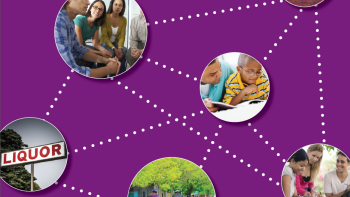
To clarify the relationships among eight forms of violence, Prevention Institute developed Connecting the Dots with the U.S. Centers for Disease Control and Prevention to build a case for practitioners to coordinate their efforts, increase their impact, and work toward preventing multiple forms of violence at once.

This Centers for Disease Control and Prevention guide, developed with help from Prevention Institute, helps public health practitioners advance health equity through community prevention strategies.