

Section 2: Implementation strategies
Section 2: Implementation strategies
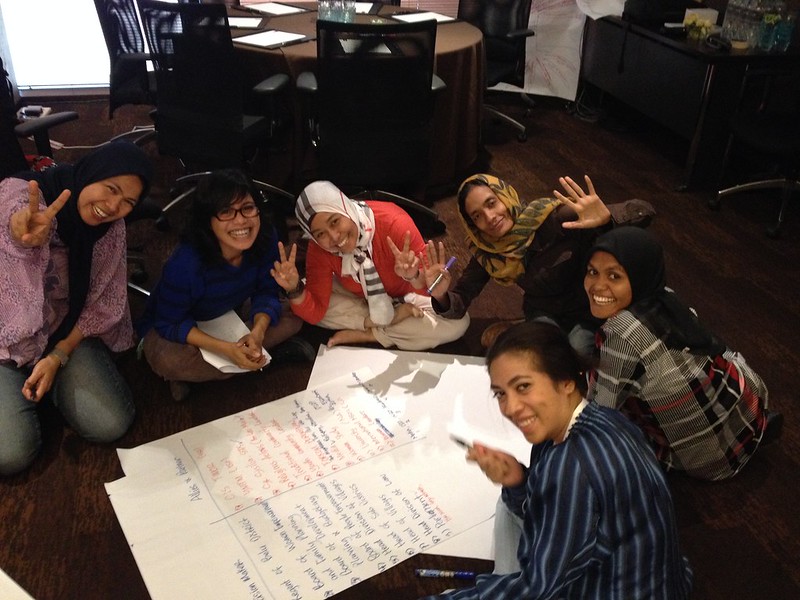
Image “Advocacy and Mobilization Workshop” by inclusivesecurity is licensed under CC BY 2.0.
Developing effective, equitable, and sustainable violence prevention policy, systems change, and resource allocation strategies involves careful consideration of local needs and assets, feasibility, fit, and ongoing evaluation and accountability mechanisms to assess what works in a specific context. Strategies should enhance individual, family and community protective factors while decreasing the risk factors for violence. To achieve equitable outcomes, it’s important to value and apply community-based evidence and recommendations rather than relying exclusively on “evidence-based” practices (EBP). Community-based evidence is “the knowledge accumulated through the ongoing successful implementation and/or evaluation of practices developed locally with significant community input.” 1 Evidence-based practices are practices that have been shown through research to produce positive outcomes (such as strengthening economic supports through tax credits to prevent community and youth violence). EBPs are often created for, and tested on, a specific and limited population of focus and tend to emphasize a more Western medical worldview that is not always aligned with cultural and contextual practices in Indigenous and communities of color. Relying exclusively on EBPs often means omitting practices that haven’t been thoroughly researched and that may be just as effective. It also means not testing emerging ideas that could prove to be more effective than anything in the EBP toolkit. And because many indigenous and communities of color do not find their needs reflected in the “evidence base”, strategies that are considered ‘untested’ or emerging are oftentimes the ones that are informed by their own direct experiences and community context. For that reason, communities of color, relying exclusively on EBPs can end up perpetuating health inequities. The Community Safety Realized Framework highlights a continuum of effective public health strategies that can be considered alongside the experiences and learnings drawn from community context.
Learning Outcomes
- Explore approaches to promote equity in the policy process
- Analyze application of research, data, and evaluation for continuous equity improvement
- Explore different examples of policy, systems change and resource allocation strategies across multiple forms of violence
1 Martinez K, Callejas L, Hernandez M. Community-Defined Evidence: A Bottom-Up Behavioral Health Approach to Measure What Works in Communities of Color. Report on Emotional and Behavioral Disorders in Youth. 2010; 10(1):11–16. https://nirn.fpg.unc.edu/sites/nirn.fpg.unc.edu/files/imce/documents/Co…